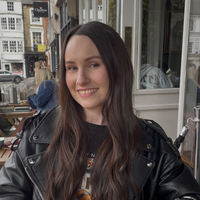
Catherine studied ancient history at Cardiff University. She now works as a sustainability analyst at Jisc
Why did you decide on a career as a sustainability analyst?
I've always loved nature and wildlife and as I learnt more about environmental issues I really wanted to make a positive difference to our planet. Over time, I realised that many of the skills I've developed through my education and varied work experience, including research and problem solving, aligned well with an analyst role.
A career in sustainability appealed to me because it fits with my values and feels future proof. There is a growing demand for carbon reporting and compliance, and I wanted to contribute to positive change. The field is also constantly evolving, which offers opportunities to learn every day.
I was previously working as a junior AI specialist at my current company, where part of my focus was researching AI's environmental impact. This work really motivated me and sparked the idea that sustainability could be something I do full time.
How did you get your job in sustainability?
An internal opportunity came up at my company, and I went for it. I think what really helped was the work I'd done researching AI's environmental impact and even attempting to calculate the emissions from using generative AI. This showed I was genuinely interested in the topic and capable of learning on the job.
Before applying, I had a chat with the head of environmental sustainability at Jisc (who is now my manager) to learn more about the role. After that, I worked really hard to prepare for the application and interview, making sure I got myself up to speed on key sustainability concepts. For me, good preparation is incredibly important, it gave me confidence and helped me show I was ready for the challenge.
What kind of tasks do you complete on a typical day?
My tasks tend to vary throughout the year. At the end of our financial year, my tasks are really focused around our internal and external carbon reporting. I collect data from across the business to calculate our emissions, along with case studies to demonstrate how our business activity is contributing to the UN Sustainable Development Goals. This work then helps to shape our annual sustainability report, which I am responsible for writing.
Alongside reporting, I work on projects within our sustainability programme, collaborating with product and service owners across the business. I also:
attend training webinars
keep up to date with developments in sustainability, while continuing to follow the environmental impacts of AI
plan upcoming communications
provide ad-hoc emission data requests.
What do you enjoy about working within sustainability?
It's an incredibly rewarding field. I've always wanted a career that feels meaningful and makes a real difference, and it's great to feel I'm making a tangible impact. It aligns with my values around climate action and social responsibility, and I enjoy collaborating with colleagues from across the business. I'm constantly learning and developing new skills, while achieving things I never imagined a few years ago.
What are the challenges?
You need to balance ambition with reality, recognise that change takes time, and be prepared for resistance. Gathering accurate data can be challenging, especially when starting from limited information, and improving data quality is an ongoing process. I've had to learn everything on the job, which has been tough but rewarding, and accepting that we can't know everything or get it right all the time has taught me that progress matters more than perfection.
On top of this, a lot of the work I do hasn't been done before so it requires a bit of risk taking. The sustainability landscape changes all the time, so continuous learning while managing day-to-day tasks can feel overwhelming at times.
What three qualities are important for a career in sustainability?
In my opinion, these are the most important:
adaptability
communication/interpersonal skills
problem solving.
Can you debunk a myth about working in sustainability?
That you have to be 100% sustainable in your personal life to work in sustainability.
The reality is no one is perfect, and that's ok. What matters is that we all try our best with the resources and options available to us. While individual lifestyle choices do have an impact, a career in sustainability is about working towards systemic change, which is where the big differences can happen.
What are your career ambitions?
At this moment in time, my main ambitions centre around improving my knowledge and experience. One day, I'd love to be in a position to share that knowledge with others and contribute to making a lasting impact.
What advice can you give to others aspiring to work in sustainability?
I think a good starting point is to learn as much as you can, whether that be listening to podcasts, reading articles, watching videos, networking or even volunteering. Discovering what drives you will help you decide which type of role may suit you best.
If you're already in employment, you could look for ways to introduce sustainability into your current role (like I did with researching AI's environmental impact). If you're still in school and know this is the career you want, explore degrees in sustainability, though it's worth remembering that this isn't the only way into the field - I studied ancient history.
Join professional bodies like the Institute of Sustainability and Environmental Professionals (ISEP), attend webinars and conferences, and follow sustainability professionals on LinkedIn for inspiration.