
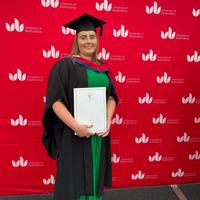
Why did you use Clearing, and what happened on results day?
I was on the fence about exactly what I wanted to pursue career-wise, so I ended up applying late. I was confused and nervous all at once because I didn't know what to expect or whether I was going to get in anywhere.
On results day, I got a call from a member of staff at the University of Bedfordshire. Funny enough, I missed the call and was left a voicemail saying they were offering me a place on the sports therapy and rehabilitation course. I was over the moon. The first person I called with the best news I could have received was my mother.
What was the Clearing process like?
I had searched for courses such as physiotherapy, occupational therapy and other related subjects, as I wasn't sure which route I wanted to take.
When I didn't get my desired course, I was naturally a little disheartened, but I was offered alternative courses that were similar to those I had initially applied for. Like everyone waiting for results or letters of acceptance, the wait felt like a lifetime.
Looking back, though, I wasn't waiting very long before I was contacted, and when that call or email came through, it was a huge weight off my shoulders.
What steps did you take to end up with the course you finally settled on?
Before starting my degree, I applied to several universities across Ireland and the UK but received several rejections, which made me question my next steps.
Eventually, I was offered a place on the sports therapy course through Clearing. While it wasn't my first choice, the University of Bedfordshire suggested it as an alternative to the course I had originally applied for, and I was happy to explore that option.
I knew it was through Clearing as the offer came later than those of many of my friends, but good things come to those who wait. Receiving that offer was a real turning point and confirmed that this was the right path for me.
Why did you decide on a career in the sport and fitness industry?
I chose to pursue a career in this field because of my interest in rehabilitation and helping people recover from injuries. I have always wanted to support people in returning to sport and everyday activities, and this career allows me to make a meaningful difference in people's lives.
How did you get your job?
After graduating and moving back home, I started applying for jobs in my local area to begin my career. A few months later, I came across an opportunity in my field and applied. Following my application, I was invited to interview about a week and a half after my initial conversation with the clinic.
Once all the interviews had taken place, I received a phone call from the clinic owner offering me the role. I was then invited to visit the clinic and familiarise myself with the environment before starting. During my visit, I met another person who had also been offered a position at the same time, which was reassuring as it meant I wasn't the only one feeling nervous about starting a new role.
What does the role involve?
There are many aspects to the role, but it is primarily massage-based and gives me the opportunity to use many of the techniques I learned during my degree. I also regularly use skills such as cupping therapy and assisted stretching techniques like Proprioceptive Neuromuscular Facilitation (PNF) to help people relax, return to their daily activities pain-free, and ultimately feel better.
What key skills and attributes do you need?
The job involves a lot of detailed conversations, understanding, and compassion with people, as many of them come in with injuries and pains they have been struggling with.
It involves patience and making sure they feel comfortable and secure enough to tell me what's been going on. It also involves me, in a sense, becoming a friend, as people seem to find it easier to talk about things going on with a stranger rather than someone in their close personal life.
How is your degree relevant to your job?
My degree gave me a strong understanding of the human body and the principles of rehabilitation, which I apply in my role every day.
The course also helped to build my confidence in:
- asking the right questions
- communicating with clients
- creating a comfortable, supportive environment where people feel open to discuss their concerns.
What are the top three qualities essential for this role?
- Confidence in your knowledge and making clinical decisions.
- Empathy and a genuine desire to help people recover and improve their quality of life.
- Strong communication skills, particularly the ability to build trust and make clients feel comfortable.
What part of your job gives you the most satisfaction?
One of the most rewarding aspects is seeing clients progress and regain a sense of normality, particularly those who initially struggle with pain or limited mobility.
Helping people get back to doing everyday activities or returning to sport is incredibly fulfilling.
What has been the biggest achievement in your career so far?
A key highlight has been the opportunity to work alongside a range of experienced therapists, constantly learning from them while also contributing my own knowledge.
Building these relationships and developing professionally within such a supportive environment have been significant achievements.
What are the main challenges?
The biggest challenge so far is that clients often compare therapists, and if they visit someone else, they are told that person doesn't do it the same way as their usual practitioner.
This can be very disheartening for them, especially if they are new to the industry, but it's nothing to do with their lack of experience - not every therapist is the same, and I need to remind myself of that from time to time.
How has your role developed, and what are your career ambitions?
Since graduating, I have continued to build my confidence, expand my client base and develop my practical skills.
Moving away from my hometown and adapting to a new environment has also played a big role in my personal and professional growth.
Looking ahead, I want to continue developing my expertise, growing my practice and supporting an even wider range of clients.
What advice would you give to other students thinking of using the Clearing process?
- Be satisfied knowing you've done your best. Results day can be stressful, but once your exams are over, there’s nothing more you can do. Trust the effort you've put in, then focus on the choices available to you.
- Keep an open mind. Try not to compare your results or next steps with your friends. Clearing is about finding the right option for you, not following the same path as everyone else.
- Don't panic. Things change, plans change, and that's okay. Take a breath, have a drink of water, get some fresh air and come back. That's when you say, 'Okay, that didn't go to plan. Where can I go from here?' Then talk to your parents, carers or someone close to you about your next steps - they are there to help.
- Look at your next steps from a different perspective. If you don't get into the university or course you wanted, that's okay - you would be surprised how often that happens. Instead of asking why it didn't work out, consider what similar courses are available and how you could take a different route.
- Ask questions before deciding. If you're offered a course through Clearing, speak to the university about the modules, entry requirements, support available and where the course could lead before accepting.
Find out more
- Explore the role of a sports therapist.
- Read about the university Clearing process.
- Search for Clearing courses at the University of Bedfordshire.