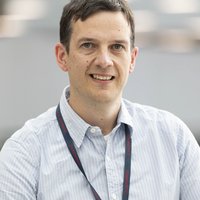
After completing a degree in electrical and electronic engineering, followed by a PhD, Stephen worked in telecommunications before securing a job as a radio frequency (RF) safety specialist at aerospace company Leonardo
How did you get your job as an RF safety specialist?
My journey began with a BEng Electrical and Electronic Engineering from Queen's University Belfast, where I later completed a PhD with the High Frequency Electronic Circuits Group. My research investigated how engineered textured surfaces can manipulate and suppress microwave radiation, aiming to enhance the performance of antennas.
Following my Doctorate, I moved into industry, primarily focusing on antenna design for telecommunications systems. This experience supported my transition into my current position, where I assess RF exposure risks and ensure regulatory compliance across diverse RF environments, thereby helping to keep staff and the general public safe.
While I didn't initially set out to become an RF safety specialist, following my interests and remaining open to new opportunities led me to a role that is both important and challenging.
What does the role involve?
It involves assessing and managing RF and electromagnetic field (EMF) hazards to minimise the risk of personnel exposure and ensure compliance with safety regulations.
At Leonardo, where we develop advanced multi-role surveillance radars and countermeasure systems, RF safety presents unique challenges. High-power RF emissions and varied operational scenarios require careful assessment and control.
What do you enjoy most about your job?
Connecting with fellow professionals has been one of the most valuable and enjoyable aspects of the job. Whether it's discussing experiences, unusual exposure scenarios, or regulations, those conversations lead to insights that are rarely found in academia.
I also enjoy collaborating with safety specialists across various disciplines within Leonardo, as it offers valuable opportunities to learn from their approaches relating to control measures and risk mitigation.
In what way is your education relevant to the role?
My time in academia has provided me with a deep understanding of how electromagnetic fields propagate and interact with various materials. This enables me to approach complex engineering challenges with both analytical precision and hands-on capability.
Additionally, the following soft skills developed during university remain essential in my day-to-day work, especially when conveying complex RF concepts to non-specialist audiences:
problem solving
teamwork
technical communication.
How has your role developed?
As my expertise has grown, I'm often invited to contribute to discussions or provide advice on matters that fall outside the traditional scope of my role. I bring insights from the telecommunications industry, an area not typically covered in the radar domain, which has enabled me to contribute more broadly and collaborate with colleagues from diverse backgrounds.
What are your career ambitions?
I am keen to contribute externally on behalf of Leonardo in the field of RF safety, through activities such as:
authoring and reviewing technical articles
developing guideline documents
participating in the evolution of international safety standards.
My involvement in The Society for Radiological Protection (SRP) and its Electromagnetic Fields and Optical Radiation (EMFOR) Committee supports this ambition by offering opportunities to collaborate within its highly respected professional network.
What advice would you offer to others interested in entering this field?
Build your knowledge - develop a strong understanding of antenna theory and RF propagation. Familiarise yourself with key documents, such as the Control of Electromagnetic Fields at Work (CEMFAW) regulations, the International Commission on Non-Ionising Radiation Protection (ICNIRP) guidelines, and Institute of Electrical and Electronics Engineers (IEEE) C95 standards - many of which are freely available online.
Gain practical experience - hands-on experience is essential. Apply your technical knowledge in real-world scenarios to build confidence and expertise. Reflect on past tasks involving RF energy - what control measures were used, and how could they be improved?
Learn from others - attend conferences, workshops and webinars. These events offer valuable networking opportunities and insights from experienced professionals working in RF safety.