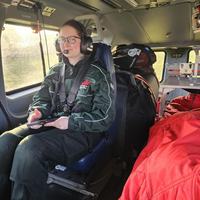
After searching for healthcare courses, Eleanor managed to secure a place on the BSc Paramedic Science at the University of Bedfordshire
Why did you choose this course and university?
From a young age, I spent time in and out of hospital environments visiting my mum, who has a heart condition, which inspired me to go into the healthcare sector.
I decided to specifically study paramedic science because I wanted to help people and be there for them when they need it most, no matter the situation.
How did you apply for your course?
I applied directly via UCAS and received an offer from Bedfordshire following a successful interview.
How is the course structured and assessed?
The course is split between studying at the university and being out on the road or in wards for work placements.
OSCEs are practical assessments in which we demonstrate clinical skills while working through a specific scenario.
This is in addition to an ePAD (electronic Practice Assessment Document) to complete during placement. It records clinical hours, allows me to receive supervisor feedback, and tracks 52 clinical skills for my mentor to sign off.
What's your university learning experience been like so far?
My experience at the university so far has been very positive. I'm now in my second year, and the course team have been extremely supportive throughout and are always there to help, whether that's with the course itself or anything happening outside of university.
Being on the course has helped me grow in confidence and build my aspirations to become a paramedic. It has given me a strong foundation to begin my journey and to develop both personally and academically.
Through simulation-based learning alongside lectures, I'm able to prepare for real-life situations, and the placement experience further refines my skills with mentor support.
How are you managing your finances as a student?
Alongside the course, I work as a care assistant to earn enough to supplement my maintenance loan and NHS bursary payments.
What does your part-time job involve?
I work as a care assistant in a care home, helping residents with their personal care needs and supporting them with daily tasks, such as serving drinks and meals.
How have you managed to balance your time between your work, study and other commitments?
Balancing time between studying and working can be difficult, especially when on placement, but the flexibility of working as a bank employee allows me to choose my shifts so they fit around my study schedule and leave time for my many hobbies.
Briefly tell us about your plans for after graduation.
After completing my degree, I aim to become a newly qualified paramedic.
In the future, I would also like to return to education to complete a Masters and work towards becoming an advanced paramedic.
What tips would you give to others thinking about going to university?
Take time to explore what genuinely interests you. Be sure to choose something you feel passionate about, as this will keep you motivated and make the experience far more rewarding.
See yourself achieving a goal or career, trust in your ability and go for it. University is a great step towards turning that ambition into a reality.
Embrace the experience as a chance to grow. This is not just in the academic sense, but also personally. It will help you build confidence, discover your strengths and develop skills you'll carry forward into your future career.