
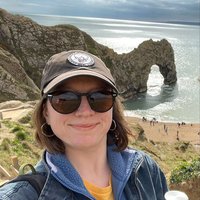
What degree did you study and where?
I graduated with an MSci Geology from Imperial College London and am currently studying for a PhD in palaeobiology at University College London.
How did you get your job?
During my geology degree, I took several modules relating to palaeontology that I really enjoyed. Once I knew I wanted to pursue it further, I started to engage more with the community.
I applied to undertake an independent summer research project at the Natural History Museum in London. I worked in the museum collections alongside professional palaeontologists. This experience showed me what a career in this field might look like on a day-to-day basis.
My Masters was integrated into my undergraduate studies, so I used this time to focus on an independent research project that introduced me to palaeontological techniques and more specialised skills. I developed these skills further throughout my PhD and experienced many of the responsibilities associated with being a full-time researcher. Following the end of my studies, I successfully applied for a research assistant position.
What's a typical working day like?
My work is focused on the broad evolutionary history of crocodylomorphs, a term for an animal group that includes ancient extinct species as well as 26 living species such as crocodiles and alligators. Currently, I am looking at the internal structure of limb bones, so I can spend whole days in the lab looking down a microscope to interpret tiny structures in the bone.
Quite often, I will be based in my office writing manuscripts, collating and interpreting data, running analyses or sending emails. I also visit museums to view their fossil collections. Here, I will collect data in the form of measurements, photographs and scans that I can then use to work out relationships within the group.
When I'm not researching, I have teaching and supervisory roles where I engage with students studying palaeontology. I also try to get involved in outreach opportunities.
What do you enjoy most about your job?
I feel privileged to be able to travel to museum collections around the world to study fossil specimens that have been unearthed after millions of years underground. It's incredibly detailed work and I can get really absorbed in it, which I love.
Occasionally, I'm lucky enough to go on field trips to excavate these fossils. It's amazing to know that in that moment, you're among the first people to see something that's been hidden in the rock for so long. Back in the office, I'm working every day with amazing colleagues who are passionate about what they do, and so the environment is fun to be in.
What are the challenges?
The years following a PhD can be quite unstable, given the short-term nature of many postdoctoral contracts. You often have to move between different institutions several times before finding something more permanent. Securing funding to cover your work can also be difficult and is often very time consuming. It can be a challenge to allocate your time appropriately, and to achieve a good balance with your research work.