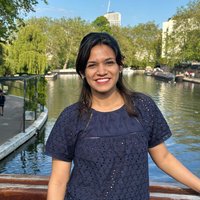
Why did you decide to study this Masters course at Sussex?
I chose the course for the following reasons:
- it has a very good course structure
- it offered a variety of modules to choose from
- the university has a good reputation
- I benefited from a scholarship
- helpful and supportive staff are available to solve international student queries.
What was the application process like?
It was quick and straightforward:
- Step one - researched a suitable course and university.
- Step two - compared the modules on offer and went through the syllabus to check it met my expectations.
- Step three - prepared for my English language test (IELTS) and passed it with good grades.
- Step four - submitted my documents, including my educational background, test results, travel documents, visa, etc., through the university portal.
How did you fund your Masters?
I took out an education loan from India for the entire course duration.
Additionally, I received a scholarship to help fund my studies.
On top of that, I had the opportunity to work as an ambassador for international students, solving problems on the university app, as a part-time job, alongside other weekend work, such as cashiering at AMEX and restocking at Sainsbury's.
Could you tell us a bit about the course and how it was structured and assessed?
It was very well structured and predominantly based on the fundamentals of data science, widely used in industry. All the modules were a perfect blend of theory and practical assignments for knowledge building.
Around 70% of the coursework was assessed through practical assignments, and 30% was theory quizzes or short written papers to answer questions. Combined, this is used to determine whether the module passes or fails.
How did postgraduate life differ from that of an undergraduate?
My undergraduate and postgraduate life have been completely different, especially since I studied my degree in India and my Masters in the UK.
This is mainly due to the teaching methodology. In India, 70% of the course is written exams with 30% focused on small projects and practical assignments. An undergraduate degree was more of a fundamental concept-building.
On the contrary, the Masters coursework at a UK university is more practical-based and has fewer written exams. Gaining hands-on experience and self-study were the key parameters.
Both were good in different ways and helped me gain further knowledge and land a job.
What did you enjoy most about your Masters course?
At first, when I came to a new country, balancing both my education and personal life was very difficult physically, mentally, and emotionally. However, while studying, I made new friends, gained new experiences, and met people from around the world, which was exciting.
I loved the overall campus experience while living in university accommodation. Meeting new people, sharing living space with them, and adjusting to their cultures was super exciting. I enjoyed that the most.
What have you been doing since graduating, and what does your current role involve?
After graduation, finding a job was difficult, and I worked part time in a French restaurant. After a few months, I secured my current role as a data scientist for a manufacturing company.
My main duties include analysing and modelling the data, and predicting failures based on observed patterns.
How did your Masters course prepare you for the job market?
While studying, I learned technical skills along with problem solving, working under pressure, meeting deadlines, consistency, etc. These are the most important skills for personal growth.
Also, soft skills and CV-making workshops helped me a lot with job applications.
What careers support or guidance did you receive from the university, and how did it help you?
I attended many CV-making, communication, and job-fair workshops to make connections. It helped me secure interviews with companies across finance, manufacturing, and healthcare.
There was also a career development service, which arranged one-to-one sessions for CV making and revision. This helped me understand the UK CV style and how these industries operate there.
What three qualities are most important for your role?
- a problem-solving approach
- data analysis skills
- strong communication.
What are your career ambitions?
To become a principal data scientist in the next five or six years.
What advice would you give to others considering a Masters degree in this field?
- Prepare for the challenges you'll face. Studying a Masters isn't going to be easy, but show resilience in overcoming these challenges.
- Be patient. Whether this is completing assignments or getting a job, know that things will eventually fall into place.
- Try to develop a problem-solving approach. This is especially true of a data science Masters.
- Be clear on the fundamental concepts of your chosen subject. With data science, this means understanding machine learning and natural language processing.
Find out more