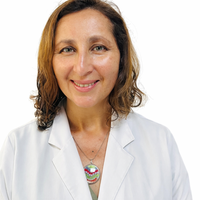
Why did you decide to study this online Masters with the University of Aberdeen?
Because I wanted to pursue a postgraduate degree in clinical nutrition while continuing my professional career. I live in Chile, and during my studies my family and I needed to spend several months living in California, USA. Because of this, I needed a programme that offered enough flexibility to continue my education regardless of where I was living.
The online format gave me the opportunity to balance my academic goals with my professional and family responsibilities, without compromising the quality of my education.
The University of Aberdeen's strong academic reputation and the flexibility of its programme made it the ideal choice.
What was the application process like?
Very friendly, well organised, and easy to follow. Whenever I needed assistance, I received prompt and helpful support from the admissions team. Overall, it was a smooth and positive experience that made the whole process much easier.
How did you fund your Masters?
I self-funded my Masters degree.
Could you tell us a bit about the course and how it was structured and assessed?
The MSc Clinical Nutrition programme was very well organised and structured around a combination of compulsory and elective courses, each contributing a specific number of academic credits.
Every course had its own assessment methods, which varied depending on the learning objectives, and each contributed to the overall programme grade.
The Masters concluded with a supervised research project, which gave me the opportunity to apply everything I had learned throughout the programme. It was an excellent way to consolidate both my clinical knowledge and my research skills, while working closely with an academic supervisor.
How did postgraduate life differ from that of an undergraduate?
One of the biggest differences was the impact it had on my professional career. After completing the programme, I was able to work in a more specialised way in clinical nutrition and make evidence-based decisions with greater confidence.
The Masters also gave me a much stronger foundation in research methodology. As a result, I have been able to participate in several research projects, applying the skills I developed throughout the programme. This combination of advanced clinical knowledge and research training has had a significant impact on my professional development.
What did you enjoy most about your Masters course?
I enjoyed learning from highly respected academics who are recognised experts in their fields. The quality of the teaching was outstanding, and I found the content of every module both engaging and directly relevant to my clinical practice.
I also really appreciated the programme's flexibility, which allowed me to balance my studies with my professional and family responsibilities.
Another highlight was the opportunity to connect with classmates from different countries. Building networks and learning from each other's experiences were invaluable parts of the programme.
What have you been doing since graduating, and what does your current role involve?
Since graduating, I have continued working in clinical practice. I currently work in my private practice, at my local hospital, and in an Intensive Care Unit, where I primarily provide nutritional support to critically ill patients.
My role as a physician is now closely centred on the nutritional management of patients across a range of clinical settings. Alongside my clinical work, I am also involved in research projects.
How did your Masters course prepare you for the job market in terms of employability skills or industry connections?
The Masters degree helped me become more specialised in clinical nutrition, which has had a significant impact on my career. In my city, there are relatively few physicians dedicated to this field, so the qualification has allowed me to expand my professional opportunities and work in a wider range of clinical settings.
What careers support or guidance did you receive from the University, and how did it help you?
The University has continued to stay in touch with me after graduation by sharing career opportunities, professional development resources, and alumni updates. Although I have not made use of these employability services, I really appreciate the University's ongoing support and commitment to staying connected with its graduates.
What three qualities are most important for your role?
- Critical thinking - essential for making evidence-based clinical decisions, especially when managing complex patients.
- Good research practice - important because it enables me to contribute to research projects.
- Specialised expertise - allows me to provide high-quality, individualised nutritional care across different clinical settings.
What are your career ambitions?
My long-term ambition is to continue developing as a specialist in clinical nutrition, combining clinical practice, research, and education. I am currently undertaking a Clinical Nutrition Fellowship and, in the future, I hope to pursue a PhD and continue collaborating on international research projects.
What advice would you give to others considering a Masters degree in this field?
I would encourage anyone considering a Masters degree in clinical nutrition to take the opportunity. It is a challenging but incredibly rewarding experience that will:
- deepen your knowledge
- help you apply evidence-based practice with greater confidence
- strengthen your critical thinking.
If you are already working as a healthcare professional, an online programme offers the flexibility to balance your studies with your career and personal life. My advice is to:
- stay engaged throughout the course
- make the most of the opportunity to learn from experienced academics and your classmates
- enjoy the journey.
The knowledge and skills you gain will have a lasting impact on your professional development.
Find out more