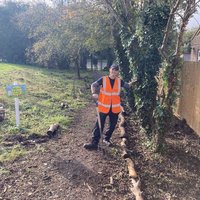
After spending years working in the prison service, Sean put his skills and experience to good use and made a change to work as a community payback supervisor - leading and motivating a team of offenders while they complete their unpaid community service
What degree did you study?
I didn’t take the traditional academic route. I joined the justice sector young and built up experience through decades in the prison service. Later on, I completed training in Cognitive Behavioural Therapy (CBT), psychology-based interventions, coaching, and programme facilitation, all on the job.
What inspired you to pursue a career in this field?
I've always worked in roles involving people. What inspired me about community payback was you get time to build relationships and have conversations with all sorts of people.
How did you get your job as a community payback supervisor?
After years in the prison service, I moved into probation work, first as a programme facilitator delivering CBT. Over time I found myself drawn to unpaid work because I enjoy the physicality and the chance to build genuine rapport. Eventually I focused fully on community payback.
What does your job involve on a typical day?
I work directly with groups completing community payback. I'm all about working alongside them digging, clearing, restoring, whatever the task is. I don't stand around. I show them how to do something and do it with them. That builds trust.
I also use soft‑skill coaching, CBT questioning, and loads of conversation. The job is part teamwork, part leadership, part mentoring.
What part of your job brings you the most satisfaction?
Seeing the change in people. You can start the day with six people who absolutely don't want to be there. By the end of it, they leave feeling like they've achieved something and worked as a team. When someone says, 'That wasn't as bad as I thought, I actually feel like I've done something,' that's gold.
What are the challenges?
It can be challenging at times. You deal with strong personalities, anxieties, and resistance. You’re balancing safety, productivity, and emotions all at once. But if you can stay calm and make good calls, it's hugely rewarding.
What three skills should a good community payback supervisor possess?
calmness
curiosity
kindness.
If you rely solely on rules and regulations, you'll burn yourself out. Just be yourself, be considerate, human, and curious. Skills can be taught later.
What type of person would suit this career?
Someone who enjoys working with people, enjoys teamwork, and doesn’t mind hard graft. You don't need DIY skills, your group will bring those. What you need is reliability, humour, and the ability to roll with whatever comes your way.
Have you undergone any specific training for your role?
Yes, lots. I've got training in CBT, coaching, programme facilitation. I also bring experience from running CBT programmes in prisons and from my teaching background.
What are your career ambitions?
I want to spread the word and get more people working in probation in roles like mine. I'm already doing recruitment fairs, I genuinely believe anyone with the right character can do this job. My aim is to keep promoting the service.
What advice would you give to aspiring community payback supervisors?
My advice is simple. Be yourself and be authentic - people can spot it straight away if you're not. Leading by example really matters in this role, so be prepared to muck in and do the graft alongside people on probation, not just tell them what to do.
Try to stay curious rather than judgemental. If you take the time to understand people and their situations, those conversations can be incredibly powerful. You often get the best outcomes when you're working shoulder‑to‑shoulder, not sat across a desk.
Don't be afraid of feeling uncomfortable. Growth usually comes from stepping outside of your comfort zone. That's where the learning happens.
And finally, don't overthink it. Less talking, more doing. If you enjoy working with people, like being hands‑on, and want a role where you can genuinely make a difference in your community, I'd say give it a go.