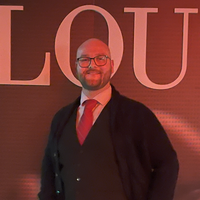
How did you get into the industry?
Like many people, my route into the industry wasn't entirely straightforward.
I spent three years of my degree immersed in short films, student productions, and even attempts to start my own production company. I left university full of enthusiasm, having parked a Light Scorpion Tank in MediaCity, staged pyrotechnics, and flipped a car for a final-year project.
However, like so many others, I found myself graduating straight into the pandemic and back working as a barista in my hometown of Southport.
Production had always been my goal, so alongside barista shifts, I began cold-contacting production managers and coordinators via Kays, Creative England's Crew Directory, and any resource I could find.
The persistence led to a handful of early opportunities, including working as a production assistant (PA) on the British Film Institute (BFI)-backed short Coconut. Just as importantly, it helped me build a stronger CV and professional confidence.
A fellow Salford alumnus shared an opportunity to work as a dressing props daily on the BBC/BFI/EMU Films feature Medusa Deluxe, shooting in Preston. I jumped at the chance. For four weeks, I worked weekdays on set and weekends back as a barista, eventually stepping up to standby props during the shoot. When the job finished, I returned briefly to barista life - but with my first feature credit secured.
Those early credits allowed me to join CallTime, a specialist crew recruitment company. Shortly after, I was put forward for - and accepted onto - a PA role in the COVID team on Doctor Strange in the Multiverse of Madness.
I handed in my notice as a barista and moved to London for what was meant to be a three-week job, which ultimately became the foundation of a five-year career in London.
Towards the end of that production, I was contacted by a production supervisor who had found my CV in a folder thanks to Calltime, and I was hired as a PA on Apple TV's Liaison. That role marked my first job in the production department, and my career truly began to take shape.
From there, I moved on to Kraven the Hunter, Blitz, Hamnet and onwards.
Are you currently employed or working as a freelancer?
I'm a freelancer, working across feature film and HETV productions. Contracts typically run for six to nine months, and in some cases, longer.
How do you usually find work opportunities?
At the beginning, it was mostly crew databases, cold emailing, and the CallTime agency. Now it's predominantly through people I've worked with before. The industry is very relationship-driven - if people trust you, you do a good job, and enjoy working with you, they'll bring you on to the next project or recommend you to others.
What are your main duties on a production?
On any given day, you're part organiser, part problem-solver, part human Google. The role of an APOC is to keep the production office running smoothly and stay one step ahead of potential issues, while supporting the:
- line producer
- production manager
- production supervisor
- production coordinator
- production team - managing above and below.
It's important to ensure the right information reaches the right people at the right time - ideally before anyone has to ask for it.
On productions such as Hamnet, The Gentlemen Season 2, and Elsinore, my day-to-day has included:
- setting up and running the production office through prep and shoot
- tech recce organisation
- production meeting planning
- travel and accommodation
- closing everything down again during wrap.
My responsibilities typically include:
- cast lists, plus grid and confirmations
- cast support
- Certificate of Sponsorship (CoS) and visas
- clearances (working with Jeva Films)
- crew training (HR and health and safety)
- film union travel insurance (FUTI) cover
- legal delivery
- prep diary
- processing core paperwork (call sheets, schedules, memos, and legal documents)
- talent summary
- vendor setup.
A key part of the role is communication and coordination across departments, acting as a central point of contact and helping track, chase, and distribute essential paperwork in a collaborative rather than panicked way.
Logistics takes up a significant portion of my time. This includes travel and accommodation for cast and crew, unit moves and cost tracking - often while plans are changing in real time.
I also help ensure above-the-line talent is well looked after and in the right place at the right time.
At its core, the APOC role is about:
- adaptability
- communication
- organisation.
You need to help the practical and logistical side run smoothly so the creative work can happen without anyone having to worry about such things.
What does a typical day look like during pre‑production versus shooting and post-production?
Prep is all about setting things up, including:
- building systems
- organising logistics
- setting the foundations for the shoot.
This is the time when potential issues can be flagged and resolved early.
During filming, the work becomes more reactive. Plans change constantly, and you're problem solving in real time.
Wrap focuses on closing everything down - paperwork, legal delivery and assets - and packing up the production office as if it had never been there.
Which departments do you work most closely with, and how do you support them?
I work closely with all departments, but particularly with assistant directors (ADs) and:
- accounts
- art
- costume
- legal
- locations.
A large part of the role is supporting them with logistics and paperwork, while ensuring production has visibility across everything that's happening.
I've always believed the production office should feel approachable - a place where crew can come for clarity, support, or a moment to regroup.
Have you attended any training programmes, or have you mainly learned on the job?
Much of production is learned through experience - long days, difficult decisions and being present when problems are solved. I've been fortunate to have excellent mentors who helped me steadily grow my skills and knowledge from job to job.
Alongside this, I've completed formal training, including the Production Guild's Talent Development Fund Step-Up to Production Coordinator (SUPC) programme and the ScreenSkills Make a Move Placement Plan. These helped deepen my understanding of production and have prepared me to step into a production coordinator role.
The SUPC course focused not just on technical knowledge, but also on the human side of production - clear communication, health and safety, and managing crew relationships calmly and respectfully.
It gave me reassurance that my instincts and approaches aligned with industry standards, which significantly boosted my confidence. That came from understanding not just what I was doing, but why - making it easier to step into responsibility with clarity.
Through the ScreenSkills plan on Hamnet, I stepped up from production secretary to APOC. I was fortunate to work alongside experienced APOCs and an incredibly supportive production team.
I'm also very grateful to my production coordinator on The Gentlemen Season 2 for putting me forward for the SUPC scheme and for fostering such a supportive, cohesive, and exciting production team environment.
Overall, my development has been shaped by on-the-job learning, structured training, and the generosity and guidance of those around me.
How has being a member of professional bodies helped you progress in the industry?
Being a member of the Production Guild of Great Britain has reinforced a strong sense of professional community and provided access to:
- networks
- resources
- training that supports long-term development.
What part of your job do you enjoy the most?
The people - and the variety. Production is highly collaborative, and over time, you build strong relationships and shared ways of working.
I also enjoy the problem solving at the heart of the role - working across departments to navigate challenges and keep things moving. There's a particular satisfaction in seeing everything come together successfully after managing many moving parts.
What qualities are important for an APOC?
There isn't a single blueprint for what is important for this role. You might be the only APOC on a show, or one of a few, and both situations come with their own challenges.
What matters most is trusting yourself, your coordinator, and the wider team, while holding on to a few core qualities:
- Clear communication - being able to pass information on accurately, follow things up tactfully, and build good working relationships across the crew makes a real difference.
- Curiosity and a willingness to learn - being open to asking questions, absorbing knowledge and refining your instincts helps you grow.
- Empathy - understanding that everyone is under pressure, and that how you communicate can be just as important as what you're communicating.
- Organisation and adaptability - plans change constantly, and being able to stay calm, reassess quickly, and find a workable solution without creating extra noise is a huge part of the job.
- Reliability and trust - if people know you'll follow things through, flag issues early, and handle problems with professionalism and good humour, you become someone the team relies on. That, more than any technical skill, is what really allows an APOC to succeed.
What are the highlights of your career so far?
Working on Hamnet and The Gentlemen Season 2 have been standouts - not just because of the scale of the productions, but because of the teams and the culture.
More broadly, progressing from a PA to an APOC is something I'm proud of. It's been a gradual journey built on trust, opportunities, and a lot of on-the-job learning.
One of the most talked-about stories on Hamnet - even mentioned by actor Jessie Buckley at the Golden Globes - was our grip team making soup on the back of a truck during the shoot. It perfectly summed up the ingenuity and camaraderie on set. People just got on with it, looked after each other, and created something special in the process.
Within the production team, our big story was James Skinner's casting. He started as a PA standing in for a camera test, and Chloé Zhao liked his presence so much that she cast him as Gilbert, Paul Mescal's on-screen brother.
These moments really capture what working in this industry can be like at its best and shape how you work going forward. Every experience adds to how you show up on the next job.
What have been the biggest challenges?
The biggest challenge is constant change. Things shift quickly, and you need to stay calm and keep everything moving without losing clarity. Learning how to manage that without getting overwhelmed has been a big part of the job.
On Hamnet, accommodating the crew in rural Hertfordshire during unit work required booking every available hotel in the area. Due to the nature of the shoot - with frequent location prep, strike, and last-minute schedule changes - plans had to be adjusted at short notice.
Overseeing accommodation on that scale was very much a trial by fire - but also the best possible way to learn. The experience helped me develop a strong instinct for choosing solutions that would work best in a fast-moving environment. It also reinforced the importance of communication, adaptability, and trust within the production team.
How has your role developed, and what are your career ambitions?
I've gradually taken on more responsibility across:
- coordination
- logistics
- paperwork
- team support.
My ambition is to move into a production coordinator role when the opportunity arises, and ultimately to progress to line producer. I want to create stability in pressured environments and foster production teams where people feel supported and valued.
Beyond that, I'm excited to continue working on ambitious, creatively driven projects - whether features or HETV - and to keep evolving alongside the industry.
What advice would you give to others looking to get into the UK film and HETV industry?
- Be proactive. Don't wait for opportunities - go and look for them. Cold emailing absolutely works. When I was starting out, I was reaching out to over 80 people a month. Most didn't reply, but a few did - and those few replies were enough to get started. It's about momentum.
- Get your CV right (and use the resources available). Before you start applying, make sure your CV is strong. Look at the CV advice in the People in TV: Runners group on Facebook and post your CV for feedback. Follow the recommendations, such as including a General Data Protection Regulation (GDPR) statement and moving education to the end. The people posting jobs in those groups are industry professionals, and attention to detail really matters.
- Take opportunities early, as everything counts. Creating short films and taking on runner roles helps to build experience and credibility. No job is too small at the beginning. You're building both your CV and your confidence.
- Develop relationships and keep track of your contacts. This industry runs on relationships. Keep a record of who you contact and work with. I used an Airtable spreadsheet to track conversations, credits, and even small personal details. That way, when you follow up, it's informed and personal. Over time, those connections become your biggest source of work.
- Be reliable, kind, and easy to work with. Your reputation is everything. People will rehire you not just because you're good at your job, but because you're someone they trust and enjoy working with. Film and TV can be intense, so being calm, collaborative, and professional goes a long way.
- Know that driving is a huge advantage, especially for runners and PAs, as shoots often operate outside of public transport hours.
- Use the search function in industry groups before asking questions, as there's often a wealth of advice already there.
- Be cautious about paid recruitment services. As a rule, you shouldn't have to pay for job access, but agencies like CallTime are legitimate exceptions.
- Remember that working in production is about enabling others to do their best work. Being part of the process, alongside such dedicated teams, is not to be taken for granted.
Find out more