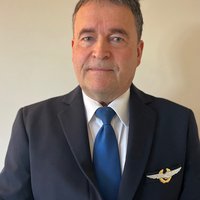
James's flying career began in the military with the RAF where he flew fast jets. He left the air force as a Squadron Leader and transitioned to an airline career where he now flies for SAS - Scandinavian Airlines
What inspired you to work as a pilot?
I was seven years old when I was taken up in a small aircraft. From then on it was my passion.
How did you get your job?
After my A-levels I was applying to universities but knew that I wanted to be a fighter pilot flying fast jets. I applied to the RAF, half expecting them to say 'no thanks' or maybe 'go to university and gain some experience', but they offered me a permanent role as a trainee pilot aged 18. I left the RAF 19 year later and transitioned to the airline industry.
There was no guarantee of a job and some of the training was expensive. I believe the transition is a little easier today, as now some of the military qualifications count towards the theoretical exam subjects.
What did your training involve?
The training never stops as a professional pilot. Even as an experienced pilot, I study online and receive regular training in the flight simulator every six months, where my competencies are assessed.
In the beginning, whether civil or military, training starts in the classroom and many exams need to be passed before you get to sit in a training aircraft. As you progress, the training aircraft becomes more complex, you fly faster and you learn to fly in all weathers, day and night.
My initial RAF training was similar to how a civilian pilot would train, up until the point where I progressed to fly the Hawk fast-jet trainer, which many people recognise because the Red Arrows display team fly them.
My civilian aviation training transition was very focused on flying as part of a crew. I also had to prove I could fly a two engine aircraft in the clouds where you have to rely upon instruments and interpret them correctly, keeping the aircraft under control, and in the right direction.
Apart from flying, there's a big focus on human factors, and I was assessed on competencies known as non-technical skills, as much as my flying skills. Both skill sets are developed and regularly assessed and I use them at work all the time.
Pilot training is notoriously expensive, how did you fund your training?
This is the advantage of joining the military. I was paid by the RAF and all of my flying training was paid for. When I left the RAF, I saved up to pay for the training, exams, aircraft hire etc.
What kind of tasks does a pilot complete on a typical day?
I check the weather before I get to work. I also check how many passengers to expect, as this affects the weight of the aircraft. Then I discuss these details with my First Officer, and we decide how much fuel we should carry. Next I meet the cabin crew. It's important that I establish a good working relationship with the cabin crew. I am responsible for the passengers and crew, so I need to know about anything that could affect the safety of the flight.
The First Officer and I split tasks in the early stage of flight preparation, for example, one of us will complete the exterior inspection, which we refer to as the 'walk round'. We calculate the speeds for take-off and other important settings, which need to be cross checked. Importantly, we conduct a pre- departure briefing, where we discuss the intended plan, as well as what we will do if things go wrong, so that in the event of failures, we already have a plan B. There's a lot to do, especially in the twenty minutes or so before we depart. As the captain you have to keep an eye on all of the activity outside of the aircraft, as well as within.
During the flight I manage the plane, the flight path, and the people. My airline focuses on care of the passengers, their experience with us, and punctuality. The airline is one of the most punctual, and that takes effort and teamwork. Above all else, safety comes first. Flying throughout Scandinavia we fly in some of the most challenging weather, especially in the winter. It's challenging but very rewarding.
What has been your proudest moment as a pilot?
In the military, I was given the task of planning and leading a multi- national mission of 45 aircraft of various types and roles.
In my airline career it was becoming a captain.
Tell us about an aspect of your role most people are unaware of…
How much continuous training and assessment there is, regardless of experience.
What type of person would suit a career as a pilot?
Someone with a passion for aviation. Ideally, someone who:
can multi-task
likes people
is able to admit their mistakes and errors and learn from them.
How to you strike a healthy work- life balance?
Communication and compromise is key. Short haul is better for family life generally. Once you've been in the industry a while you can see the differences between employers and choose accordingly. Part-time work is usually available after a year or so in an airline. You have to pass a medical examination at least once a year so it's important to look after your health.
What are your career ambitions?
I'm not far from the end of my airline career but I'd like to continue by training future pilots.
What advice would you give to an aspiring pilot?
Keep your dream alive and at the forefront of your mind. However, before committing any large sums of money, go and get a class one medical examination. Then go to a Pilot Careers Live Expo.